Jump to:

Anniversary Showcases Groundbreaking Innovations for Businesses and Consumers
This year marks a major milestone for Experian as its Innovation Lab in North America celebrates 15 years of driving technological transformation. Over the past decade and a half, the Lab has been at the forefront of data and AI-driven solutions, helping our clients reshape industries and expanding financial inclusivity.
A Legacy of Innovation
The Experian Innovation Lab has played a critical role in advancing AI-driven credit risk models, fraud detection systems and no- and low-code AI tools. A groundbreaking achievement is the development of the Ascend Analytical Sandbox™, the industry’s first Big Data architecture-based commercial product. This tool evolved into the Experian Ascend Platform™, revolutionizing data analysis with advanced visualization, seamless model development and deeper consumer insights.
The Lab’s commitment to innovation is exemplified by its work to help develop Experian Assistant, a Generative AI-powered tool using natural language processing to expedite model development and address complex data challenges. By incorporating agentic AI, Experian Assistant enhances credit scoring accuracy for a broader consumer base for financial services clients—aligning with Experian’s mission to foster financial inclusion.
Transformative Technological Milestones
Throughout its 15-year journey, the Experian Innovation Lab has worked on numerous industry-first advancements, including:
- AI-Driven Marketing & Fraud Detection – Leveraging AI for personalized marketing and real-time fraud detection.
- Machine Learning for Identity Resolution – Enhancing security and efficiency in identity verification.
- Generative AI for Consumer Products – Transforming how individuals manage credit and make informed financial decisions.
Shaping the Future of AI and Data Science
At its core, the Innovation Lab thrives on exploration and collaboration. Engaging leadership and fostering grassroots innovation accelerates progress through prototyping and employee-driven ideas. This dynamic approach ensures Experian remains a leader in AI, machine learning and data analytics.
The Lab’s success has inspired additional innovation centers in the UK and Brazil, further amplifying Experian’s global impact.
AI for Good: Innovation with Purpose
Beyond financial services, the Lab has harnessed AI for societal impact. The Experian COVID-19 Outlook and Response Evaluator (CORE), an interactive heat map, helped healthcare organizations identify communities most at risk. By analyzing de-identified health data, this tool helped provide insights for pandemic response.
Additionally, the Lab has used AI to analyze data and generate insights to help combat human trafficking, underscoring Experian’s dedication to addressing social challenges.
As the Experian Innovation Lab enters its next chapter, it remains committed to pushing the boundaries of technology and data science, ensuring its innovations continue making a meaningful impact.

Trust is foundational to everything we do at Experian. It’s how we build products people rely on, how we serve clients and consumers, and how we work together every day. That focus makes this year’s recognition from Fortune’s 100 Best Companies to Work For List even more meaningful. For 2026, Experian soared to ranking No. 38—our highest placement ever and a more than 20‑spot jump from last year. This marks our seventh consecutive year on the list. What makes this honor especially significant is how it’s earned. The ranking is based entirely on employee feedback from the Great Place to Work survey. Our people told us they feel welcomed, trusted to do their jobs, respected for who they are, and valued for the impact they make. They shared that Experian is a place where people can be themselves and count on one another. That internal trust matters externally. When employees trust their workplace, they do their best work. That translates directly into the trust our consumers and clients place in us—to handle data responsibly, deliver insights with integrity, and help people and businesses move forward with confidence. Our way of working has earned Experian the 2026 BIG Innovation Award for its AI-powered Experian-Assistant for Model Risk management, Top Score in the 2026 Equality 100, Best Place to Work for Disability Inclusion, and as one of the 25 World’s Best Workplaces™ 2025. This recognition reflects the culture our teams continue to build across North America—one grounded in trust, accountability, and purpose. We’re proud of the progress we’ve made, and we know there’s always room to go further. Thank you to everyone who places their trust in Experian. We don’t take it lightly. Learn more in the Experian 2025 Power of YOU Reports: English | Portuguese | Spanish
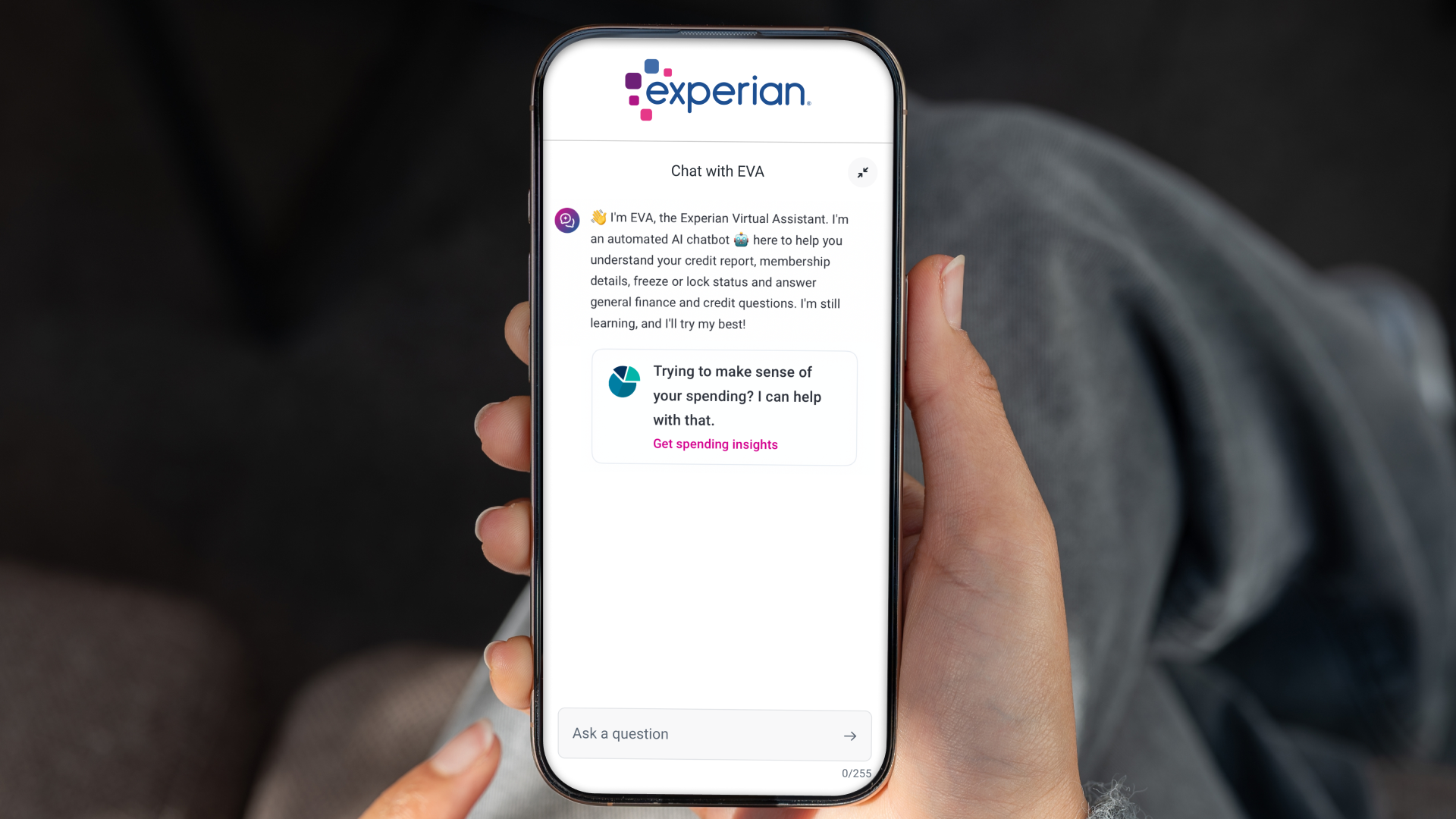
When I began my career as a software engineer, I was captivated by solving problems with code and creativity. Over time, I realized what energized me most was not just the technology, but the people it serves. I wanted to understand why I was building something and see its real-world impact. That perspective led me to product management, where I could combine technology, empathy, and innovation to solve meaningful problems for consumers. At Experian, that mindset shapes what we call our Consumer First AI strategy. Consumer First AI means meeting people where they are in their financial journey. Some are building credit for the first time. Others are recovering from setbacks. Many are exploring new opportunities, planning for major milestones, or working toward long-term goals. Each person’s path is different. Consumer First AI is about using technology not just to provide information, but to guide consumers with clarity and relevance based on what they are seeking in that moment. One of the most powerful examples of that work is the evolution of EVA, the Experian Virtual Assistant™, and how it brings Consumer First AI to life. EVA began as a simple tool to help consumers get quick answers about their credit. Today, it is far more adaptive and intelligent. Powered by advanced artificial intelligence and grounded in Experian’s trusted data expertise, consumer-permissioned financial information and built-in privacy and security guardrails, EVA is available to deliver personalized conversational financial guidance designed to help members make informed decisions. From Insights to Action At its core, EVA makes financial information accessible and actionable. Experian members can ask questions, receive personalized financial insights, and potentially take action in real time. Whether freezing or unfreezing their Experian credit file, managing membership features, or exploring tailored offers via third-party lenders in Experian Marketplace, they can do it within a seamless conversational experience designed to simplify decisions. Our latest evolution expands beyond credit insights to provide clearer visibility into spending and cash flow. Through connected permissioned financial accounts, members can track spending trends, recurring expenses, and changes over time. EVA also can deliver tailored recommendations to help reduce unnecessary spending, manage subscriptions, and better plan for monthly obligations. By translating complex financial data into practical next steps, EVA serves as an intelligent financial copilot. It helps people move from insight to action with confidence and supports smarter budgeting, saving, and borrowing decisions aligned with their goals and financial priorities. A Mission That Is Personal This mission is deeply personal to me. I was born in the United States but spent my formative years in Taiwan, where credit was not part of everyday life. When I returned to the United States for college, I realized that being financially responsible did not automatically translate into having a strong credit profile. I was fortunate that credit did not stand in my way, but that uncertainty stayed with me and shaped my perspective. That experience fuels my passion for building tools like EVA. Financial health shapes where we live, what we can plan for, and how secure we feel. Yet managing money and credit can still feel complex or intimidating. EVA helps cut through that complexity by meeting people where they are and adapting in real time to their needs with guidance that feels clear and relevant. Consumer First AI in Action At Experian, our mission is bringing Financial Power to All™. EVA represents Consumer First AI in action by combining advanced artificial intelligence, human centered design, and a trusted data foundation to expand access to personalized financial tools and support greater financial inclusion. This milestone builds on our broader strategy to embed intelligent, trusted AI across the consumer ecosystem. Through continued advancements in EVA’s adaptive financial guidance and the launch of Experian Insurance Marketplace integrate with the ChatGPT platform, we are meeting consumers wherever they are with personalized insights and relevant financial opportunities delivered through conversational experiences. EVA is more than technology. It is a Big Financial Friend, or BFF, and a meaningful step toward making personalized financial information accessible, intuitive, and empowering for millions of Experian members. EVA provides general information and educational insights only. It is not a financial advisor and does not provide personalized investment, legal, tax, or accounting advice, nor does it establish any advisor-client or fiduciary relationship. Any financial offers displayed are provided by third-party lenders and are subject to the lenders’ eligibility and approval processes. Users should consult a qualified, licensed professional for personalized advice. Experian’s AI tools operate under internal governance, testing, and privacy controls designed to promote accuracy, fairness, and consumer protection. ChatGPT is a trademark of OpenAI. The Experian Insurance Marketplace app is developed and operated by Experian and is not affiliated with or endorsed by OpenAI.
Identity is the cornerstone of trust. Trust allows businesses to grow and consumers to transact with confidence. It also enables digital ecosystems to function at scale. As AI becomes an active participant in every digital interaction, earning and protecting that trust has never been more critical. To build trust, companies need to recognize the people they’re interacting with online and distinguish good customers from fraudsters. Businesses look to Experian for our extensive consumer data, analytics, and decisioning solutions so they can more confidently identify, authenticate, and engage customers across digital channels. This week, we are accelerating that mission with the acquisition of AtData, a global leader in email-based identity intelligence. Email remains one of the most enduring and widely used digital identifiers. AtData brings real-time intelligence on more than 10 billion email addresses worldwide, adding a powerful and highly predictive signal to Experian’s identity and fraud platform. In a landscape shaped by automation and generative AI, the ability to assess email risk in real time can be a key asset in underwriting trust. Identity Powered by Real‑Time Email Intelligence AtData’s email intelligence provides signals such as domain reputation, account tenure, and behavioral risk to help distinguish legitimate customers from synthetic or manipulated identities. These signals can provide a better experience for good consumers, while supporting earlier detection of first-party fraud, third-party fraud, and synthetic identity schemes before losses occur. Going forward, email intelligence will play an important role in the next generation of Experian solutions, including agentic AI systems that can reason, adapt, and act on trusted identity signals in real time. When combined with Experian’s device intelligence, behavioral analytics, and advanced decisioning capabilities, these insights enable organizations to: Identify and authenticate consumers with greater confidence Detect fraud earlier with improved precision and speed Enhance engagement through richer, more connected identity profiles With AtData, we are not only expanding our data assets, we are also advancing a future where identity is more trusted. I’m excited to build upon our world-class identity and fraud solutions together.